
Attachment Disorder: Classification, Warning Signs and Support
What Is an Attachment Disorder? Definitions and Classification
In psychology, the term ‘attachment’ refers to a child developing an emotionally close, secure relationship with a small number of reliable caregivers. The quality of this early attachment shapes how people later experience closeness, trust, comfort and self-soothing. An attachment disorder is a relatively rare disorder of the ability to form relationships that requires treatment and is usually attributable to severe early-life stress. It differs significantly from the common insecure attachment patterns, which do not constitute a medical condition.
In professional terms, an attachment disorder is described in international classifications as a disorder that begins in early childhood. It manifests as persistent difficulties in seeking, allowing or appropriately managing closeness. The severity can vary greatly depending on developmental age, previous experiences and the environment. A careful diagnosis is crucial to avoid misinterpretations and to initiate tailored support.
Insecure Attachment Versus Attachment Disorder
Not every difficulty in relationships constitutes an attachment disorder. Insecure attachment patterns often arise from inconsistent or unclear care and are common. They can be distressing, but are not considered a disorder in themselves. By contrast, an attachment disorder is present when the formation and maintenance of selective attachments are persistently and significantly impaired, typically beginning before the age of five and leading to significant difficulties in daily life. A thorough medical history, the individual’s life story and their current relationship dynamics are considered together.
Reactive Attachment Disorder and Disinhibited Social Engagement Disorder
From a professional perspective, a distinction is made between two core clinical presentations, which differ markedly in their behavioural profiles but often stem from early, severe deprivation or neglect:
- Reactive attachment disorder (inhibited type)
Social withdrawal, limited seeking of comfort and restricted expression of positive emotions towards attachment figures. - Disinhibited social contact disorder
Unreserved, non-selective social behaviour, even towards unfamiliar adults, without age-appropriate reserve.
The specific form should be clarified through a qualified diagnostic assessment.
Causes and Risk Factors
The development of attachment depends on reliable care, sensitive responsiveness and protection. If these basic conditions are severely or repeatedly lacking, the risk of an attachment disorder may increase. The most common stress factors include:
- Early neglect or maltreatment
- Frequent changes in primary caregivers
- Unpredictable care or support arrangements
- Prolonged stays in hospital or care homes without a consistent primary caregiver
In addition to environmental factors, individual characteristics also play a role. Temperament, difficulties with self-regulation or additional developmental risks can influence a child’s responses and place greater demands on caregivers. At the same time, protective factors are important, as they can help to stabilise development again:
- A stable, sensitive primary caregiver
- Safe and reliable environment
- Structured daily routines
Early Experiences and Caregiving
In the first years of life, the child learns to regulate stress. They need adults who notice their signals, respond appropriately and offer comfort. Chronically absent or inconsistent responses can lead the child to avoid closeness, cling excessively or approach interactions with uncertainty. In the case of reactive attachment disorder, these patterns are typically recognisable from an early age and across a range of situations.
Individual Factors and Family Stressors
Parental mental health conditions, addiction, violence in the child’s environment or extreme social stress can limit the sensitivity and availability of primary caregivers. Similarly, prematurity, medical complications or regulatory disorders can complicate interaction. It is not a single factor that is decisive, but rather the interplay of factors over time. A nuanced assessment therefore takes into account disruptions in the child’s life history, available resources and opportunities for change.
Warning Signs in Everyday Life – From Early Childhood to Adolescence
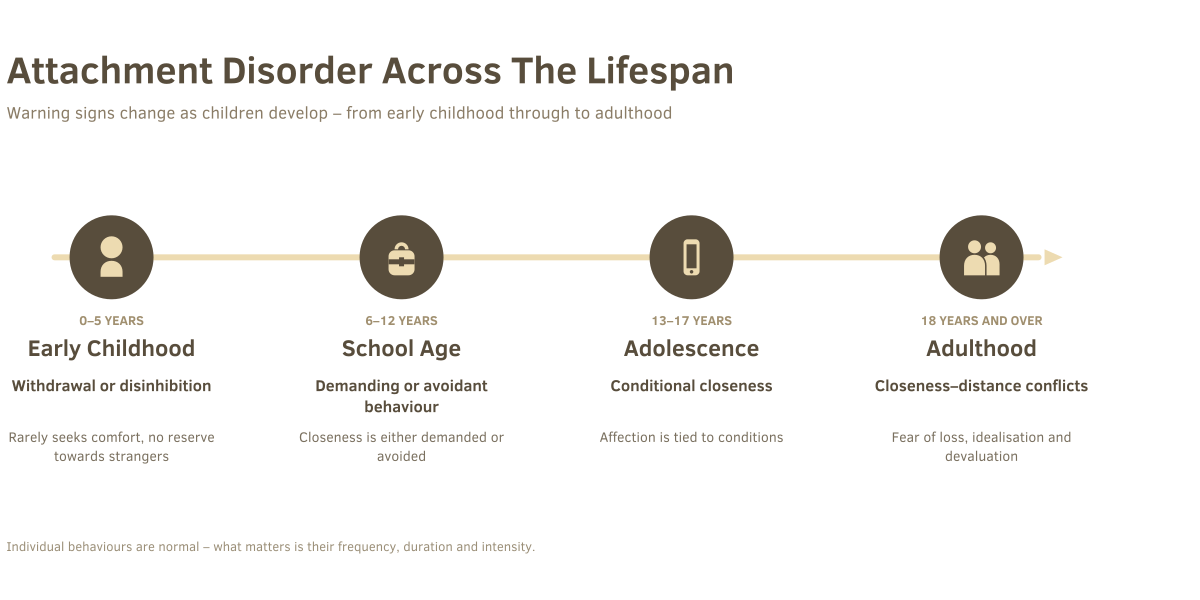
Warning signs develop differently depending on age. In the case of an attachment disorder in a child, persistent abnormalities in proximity-distance behaviour are often noticeable, which cannot be explained solely by temperament or isolated periods of stress. The ability to seek and accept comfort also often remains limited.
At the same time, caution is advised: certain behaviours – such as stranger anxiety or defiant reactions – are part of normal development. What is crucial is the frequency, duration, intensity and context. A professional assessment helps to distinguish between challenging but typical behaviour and issues requiring treatment.
Early Childhood: Withdrawal, Over-adaptation, Disinhibition
In young children with attachment disorders, patterns such as minimal eye contact with familiar figures, little expression of joy during interaction, conspicuous indifference to separation, or excessive familiarity with strangers are frequently observed. Some children appear overly compliant and ‘low-maintenance’, whilst others are difficult to calm. If you repeatedly observe behaviour that suggests the child may have an attachment disorder – for example, because they rarely seek or accept comfort – a paediatric-psychological assessment is advisable.
- Low selectivity
Children approach strangers without hesitation, but show little genuine closeness to their primary caregivers. - Limited seeking of comfort
In stressful situations, they rarely seek closeness or do not accept comfort, even when it is available. - Contradictory behaviour
Alternating between withdrawal and excessive clinginess without any apparent trigger.
School-age and Adolescence: Relationship Patterns and Emotional Regulation
During school age, difficulties often become apparent in friendships and in interactions with authority figures. Some children display demanding or provocative behaviour, whilst others withdraw from relationships before closeness develops. In times of crisis, patterns may emerge that appear to be emotional blackmail on the part of a child: affection is ‘demanded’ or closeness is made conditional, often out of fear of rejection. In many cases, such strategies are an expression of learned defence mechanisms, not malicious intent. Typical relationship patterns during school age include:
- Demanding or provocative behaviour
Attention and closeness are actively demanded, sometimes in ways that overstep boundaries. - Premature withdrawal from relationships
Closeness is avoided before it can even develop – out of fear of rejection. - Conditional affection
Closeness is made conditional or demanded, often as an expression of insecurity rather than deliberate manipulation.
Terms such as ‘narcissistic daughter’ circulate on social media, but should be used with great caution. A derogatory label is no substitute for a diagnosis and usually falls short. It is more important to understand the underlying need for security and to organise appropriate support, rather than rushing to pathologise the behaviour.
Adulthood: Closeness and Distance, Love Addiction and Trust
Untreated early relationship experiences can have lasting effects into adulthood. Difficulties with trust, persistent fear of abandonment or a pattern of changing, intense relationships may arise. In some cases, patterns emerge that are colloquially referred to as ‘love addiction’. Typical signs include:
- Strong focus on a single relationship
- Pronounced fear of loss
- Repeated clinging despite rejection
- Rapid idealisation and equally rapid devaluation of partners
Love addiction is not a recognised diagnosis in its own right, but it may indicate early-acquired attachment and emotion-regulation patterns. Here, too, an attachment disorder is not the only explanation. Life circumstances, depression, anxiety disorders or trauma-related symptoms can lead to similar patterns. A professional assessment helps to identify the right starting points for therapy and stabilisation.
Distinguishing From Other Disorders and Common Misconceptions
Many behaviours overlap with other developmental conditions or disorders. It is therefore important to distinguish between them. Not every instance of social awkwardness or a lack of personal space is indicative of an attachment disorder. Changes in environment, experiences of bullying, school-related stress or physical causes can also lead to withdrawal or fluctuations in sociability.
Similarly, phases of developing autonomy – such as the ‘terrible twos’ or puberty – are characterised by strong emotions and testing of boundaries. It would be short-sighted to jump to conclusions about pathological patterns based on this alone. A professional diagnosis takes into account the developmental trajectory, the intensity and the function of the behaviour.
ADHD, Autism and Trauma – Where Do They Overlap?
In the case of ADHD, the main features are attention regulation, impulsivity and hyperactivity; with autism, the focus is on difficulties with social communication and sensory characteristics. Both conditions can affect relationships, but they are not attachment disorders. The consequences of trauma can also shape attachment behaviour; however, reactive attachment disorder is linked to early, severe relational deprivation. The core characteristics can be broadly distinguished as follows:
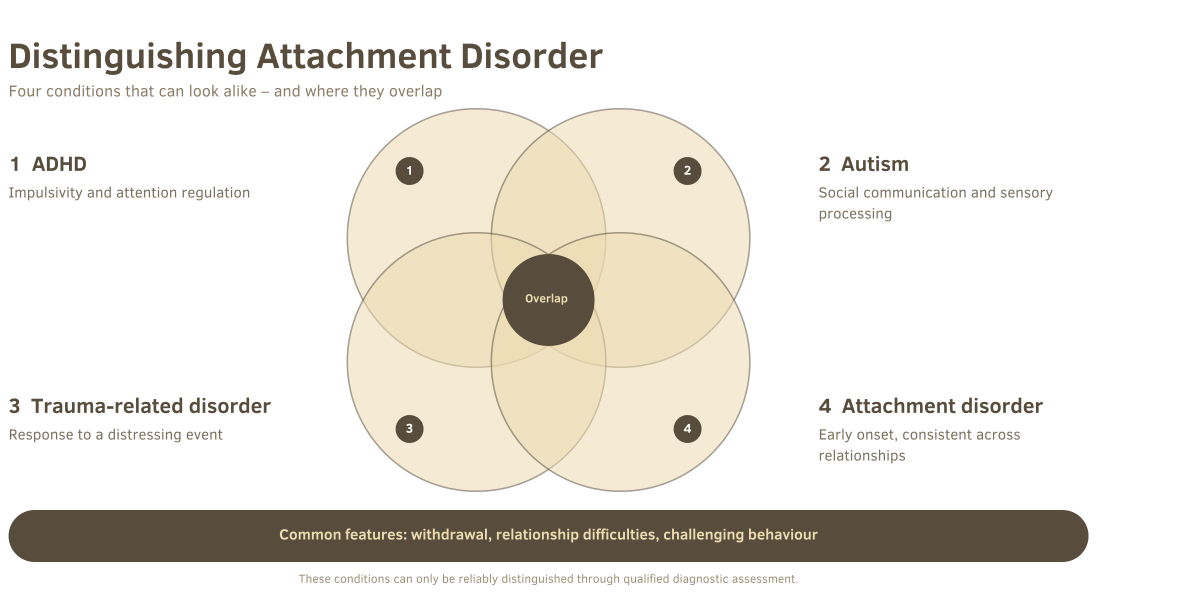
A comprehensive diagnostic assessment systematically clarifies these differences.
Challenging Behaviour Without a Disorder: Understanding Developmental Crises
Some families experience stressful confrontations that are perceived as emotional blackmail by a child. These are often heightened patterns in stressful situations – such as during transitions, changes of school or family conflicts. A professional assessment helps to understand these dynamics, set clearer boundaries and establish support – without jumping to conclusions such as ‘narcissistic daughter’.
First Steps for Parents and Carers
If you notice signs that might indicate an attachment disorder in your child, it is helpful to organise your observations: In which situations do problems arise? How does the child respond to offers of comfort? Which caregivers are good at establishing closeness? Taking notes over several weeks provides a more realistic overview than observing individual incidents.
At the same time, practical measures in everyday life can help stabilise the relationship. Key elements include reliable routines, clear, warm boundaries and responding sensitively to signals. The aim is to increase security and predictability, not to achieve perfection. External support – such as parenting advice, child and adolescent psychotherapy sessions or social paediatrics – can provide valuable relief.
Strengthening the Relationship in Everyday Life
Relational security is built through many small, recurring experiences. Make a conscious effort to set aside exclusive time together, keep your promises, and describe feelings calmly and specifically. Even short, reliable rituals – helping them fall asleep, shared meals, bedtime rituals – provide a sense of structure.
- Shared attention
Short, uninterrupted periods each day during which you devote your full attention to the child without correcting or judging them. - Putting feelings into words rather than judging them
Reflect the child’s feelings (“You’re feeling very angry right now because …”) whilst offering support. - Create predictability
Clear routines and announcing changes in advance reduce stress during sensitive moments.
Boundaries, Security and Co-regulation
Warmth and clarity are not mutually exclusive. Boundaries provide security when they are communicated consistently and calmly. Co-regulation means that adults help children manage intense emotions until the child is increasingly able to do so themselves. Praising successful management of closeness and distance, rather than focusing solely on ‘mistakes’, supports new learning experiences. Co-regulation can be achieved in everyday life, for example, by:
- A calm, steady voice during turbulent moments
- Offering physical closeness without forcing it
- Naming feelings before looking for solutions
- After the storm, taking a moment to reflect together on what helped
Treatment at the Verus Bonifatius Clinic: Diagnosis and Therapy
If an attachment disorder is suspected, the process at the Verus Bonifatius Clinic begins with a structured, multi-professional diagnostic assessment. This includes a developmental and relational history, observations of interaction, standardised questionnaires and differentiation from other clinical presentations. Psychoeducation explains the links between stress regulation, attachment behaviour and learning processes, and establishes a common language for the therapeutic goals. The aim is to arrive at a clear, comprehensible assessment and an individualised treatment plan.
The therapy is tailored to the child’s age, the severity of the condition and the family’s resources. Attachment-based, behavioural therapy and trauma-focused elements are combined as required. Work with parents and families is a central component, as relational experiences are continuously shaped in everyday life. Where necessary, the school or nursery is also involved to adapt transitions and requirements; a reintegration or stabilisation plan ensures that new experiences are transferred into everyday life. For older adolescents and adults with long-standing patterns – such as tendencies towards love addiction – targeted work is carried out to build sustainable, balanced relationships.
Therapy Methods for Attachment Disorders at the Verus Bonifatius Clinic
The individual therapeutic components are interlinked and combined on a case-by-case basis – tailored to the patient’s age, the severity of the attachment disorder and the family’s resources. Key treatment methods may include:
- Marte Meo
Video-based communication analysis that helps parents and carers respond more sensitively to a child’s signals and specifically reinforce successful moments of connection in everyday life. - Family therapy intervention
Supports breaking patterns, secure communication and clear boundaries, and involves the entire family system in the treatment. - Depth psychology (individual and group therapy)
Helps children and young people to develop new emotional and relational skills and to gently process distressing early experiences. - Behavioural therapy (individual and group)
Systematically modifies specific everyday situations, promotes successful bonding experiences and supports the practice of new behaviours when interacting with others. - Body, art and music therapy
Supports non-verbal emotional regulation and, particularly for younger children, provides a way to access feelings that are (as yet) difficult to put into words. - Body awareness, mindfulness, progressive muscle relaxation
Promotes the ability to recognise and regulate internal tension at an early stage – an important foundation for greater confidence in situations involving closeness and distance.
These therapeutic components are individually combined to create a personalised treatment programme tailored to the severity of the attachment disorder and the family’s circumstances.
FAQ
Can an Attachment Disorder Still Change in Adulthood?
Yes. Attachment and relationship patterns can be learnt and changed, even in adulthood. However, an attachment disorder cannot simply be ‘trained away’. In many cases, a stable therapeutic relationship, targeted emotion regulation, work on life experiences and gentle exposure to successful attachment experiences are required. Progress is often made step by step. Self-help advice is no substitute for therapy when the impairment is significant.
How Does a Reactive Attachment Disorder Differ From Autism?
In autism, distinctive features of social communication, interests and sensory processing are evident from the outset. In reactive attachment disorder, selective bonding and the seeking of comfort are impaired, usually following severe early experiences of relational deprivation. There are behavioural overlaps that are difficult to interpret without context. The distinction is made on the basis of overall development, the individual’s life history and specific diagnostic criteria.
What Can Foster or Adoptive Parents Do If They Suspect Attachment Problems?
It is important to have realistic expectations, provide plenty of structure and offer gentle, consistent care. At the same time, foster or adoptive parents should seek professional support at an early stage: child and adolescent psychotherapy sessions, social paediatric centres, and attachment-focused family counselling. A clear diagnosis determines whether an attachment disorder is present and what support is appropriate. Liaising with specialist services and the school helps to jointly establish a reliable framework.
Published on: 30.09.2026