
Psychovegetative Exhaustion in Families – When Parents and Children Are Overwhelmed at the Same Time
When Exhaustion Dominates Everyday Family Life
Psychovegetative exhaustion occurs when prolonged stress, emotional overload, and a lack of rest periods disrupt the balance between body and mind. In families, this phenomenon often manifests itself through a combination of several factors: high everyday demands, time pressure, and conflicts lead to parents having fewer and fewer reserves of energy – and children often witness the strain.
Typical consequences include increasing irritability, difficulty concentrating, sleep problems, or physical complaints. Since family members react to each other, exhaustion can quickly become mutually reinforcing. A better understanding of this dynamic helps to recognize warning signs early on and seek support in good time before permanent stress develops.
The rest of this article looks at the causes and family dynamics behind psychovegetative exhaustion, how the strain affects parents and children alike, and how temporary exhaustion can be told apart from a condition that requires treatment. Finally, we outline the therapeutic and preventive steps that help families find their way back to inner stability.
Causes of Psychovegetative Exhaustion in the Family Context
Psychovegetative exhaustion rarely arises from a single trigger. Often, several stress factors act simultaneously, building up over weeks or months. Especially in the family environment, demands, expectations, and emotional dynamics can place a permanent strain on the vegetative nervous system.
Permanent Stress and Lack of Regeneration
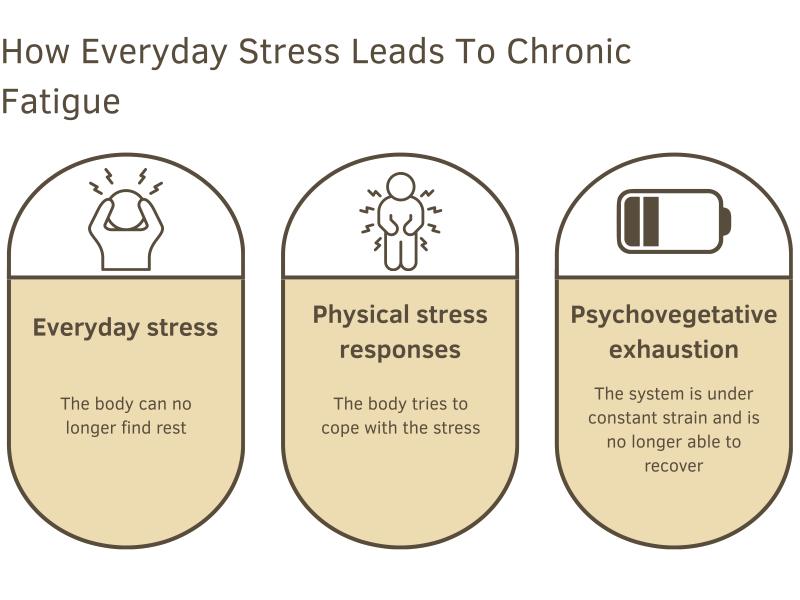
Many families experience a daily routine that leaves little room for relaxation. Appointments, caregiving responsibilities, professional demands, and organizational tasks create constant time pressure. If this stress becomes routine, the stress system remains permanently activated. Physical signals such as fatigue, tension, sleep disorders, or cardiovascular complaints can be the result.
Emotional Overload and Dysregulated Stress Systems
In addition to external demands, emotional stress plays a central role. Conflicts in the family environment, concerns about a child’s development, or the feeling of having to do everything perfectly lead to inner tension. The autonomic nervous system reacts to this with symptoms such as nervousness, restlessness, or gastrointestinal complaints. Without sufficient relief, this tension can become entrenched. Methods for promoting mindfulness and body awareness can help to relieve the autonomic nervous system and regulate stress symptoms.
Family Dynamics That Increase Stress
Family systems are sensitive: stress experienced by one member usually affects everyone. The following patterns often reinforce each other:
- High expectations of oneself or each other: when parents and children silently assume the other person simply has to “function,” a quiet pressure of expectation builds up.
- Misunderstandings and communication problems: when time pressure leaves no room for clarification, conflicts pile up instead of being resolved.
- Lack of shared rest periods: when every family member’s schedule is so full that the shared moments of recovery disappear.
- Increasing irritability and withdrawal: exhausted people react more sensitively to small things or pull back, which other family members can experience as rejection.
These dynamics mean that stress is felt not only individually, but throughout the entire family system. The risk of collective exhaustion increases if no counteracting regulatory forces emerge. Family therapy interventions can help to reveal such patterns and stabilize relationships in the long term.
Consequences for Parents, Children, and Family Relationships
Psychovegetative exhaustion affects the entire family balance. Both parents and children react to the increased stress – often reinforcing each other.
Effects on Parents and Children
Parents often experience fatigue, irritability, sleep problems, and physical complaints such as heart palpitations, dizziness, or gastrointestinal symptoms. Emotional resilience decreases, making it more difficult to cope with everyday demands.
Children are sensitive to the change in mood in everyday family life. They often display insecurity, withdrawal, irritable behavior, or psychosomatic complaints such as stomachaches and headaches. Concentration and sleep problems can also increase, as children’s stress regulation depends heavily on stable caregivers.
Family Stress Spirals
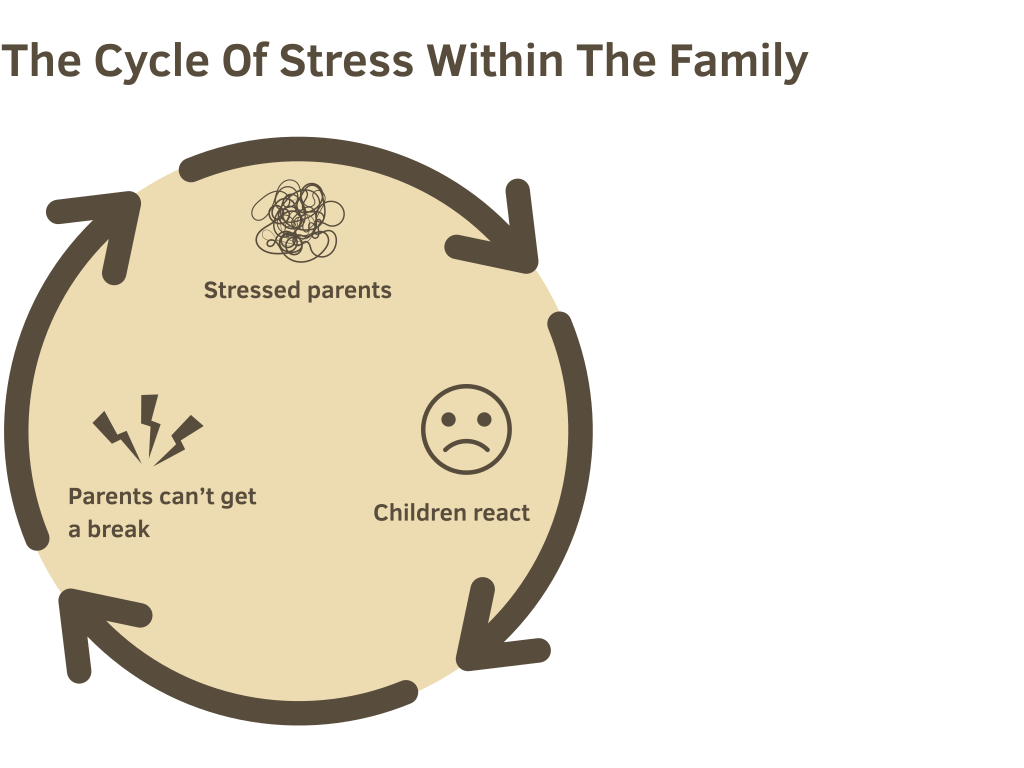
When parents have less energy, conflicts, misunderstandings, or withdrawal from joint activities arise more quickly. Children react to this with signs of stress, which in turn increases the strain on their parents. This can create a spiral in which exhaustion reinforces itself throughout the entire family system. Recognizing this dynamic early on is crucial in order to counteract it. Talk therapy and psychosomatic services help to understand these complaints and provide age-appropriate support.
When Additional Burdens Are Added
Certain family situations increase the risk of psychovegetative exhaustion even further:
- Single parents: often carry organization, upbringing, and income without a second caregiver to share the load, which makes it difficult to plan any real recovery time.
- Families with a chronically ill or disabled child, or a child with special support needs: additional medical appointments, therapies, and organizational effort come on top of an already demanding routine.
- Families caring for dependent relatives: they often juggle several areas of responsibility at once and wear themselves out in the process.
In all of these situations, admitting one’s own exhaustion can be especially difficult, since the surrounding environment often expects that “this is simply how it is.” This is precisely why it is important to seek support early and to take one’s own limits seriously instead of accepting them as an unchangeable part of the situation.
What Support Can Look Like: Diagnosis, Therapy, and Relief Services
Psychovegetative exhaustion has many causes and manifests itself in different symptoms. An early assessment of the stress situation helps to find suitable ways of providing support and restoring family stability.
Diagnosis and Assessment of Stress
The diagnosis is based on typical physical, emotional, and behavioral stress characteristics. These include persistent fatigue, sleep disorders, vegetative complaints, and changes in family behavior. In addition, psychosocial stress factors, family dynamics, and possible triggers are taken into account. The aim is to identify the stress profile and take appropriate steps.
Therapeutic Approaches
Therapy options usually address several levels:
- Promotion of stress management and emotional regulation: those affected learn to recognize their own limits early and counteract them with targeted strategies before tension builds up.
- Clarification of stressful family patterns: recurring conflicts and communication difficulties are worked through together in order to change entrenched dynamics.
- Strengthening of resources and self-care: personal needs are noticed again and integrated into everyday life instead of being permanently pushed aside.
- Support in structuring everyday life: clear routines and realistic priorities help direct available energy more effectively.
Depending on the situation, behavioral, systemic, or psychosomatic approaches are used. Relaxation techniques can also be helpful in reducing vegetative symptoms.
Relief in Everyday Life
In addition to therapeutic measures, practical relief plays an important role. Helpful measures include:
- Fixed daily structures and clear routines: they provide orientation and reduce the number of decisions that have to be made anew every day.
- Prioritization of tasks and breaks: not everything has to be done immediately – consciously postponing tasks creates room for recovery.
- Involvement of external support, e.g., through counseling centers or care assistants: even small-scale help can noticeably contribute to stabilization.
- Conscious, unplanned relaxation time for the family: shared time without an agenda strengthens togetherness and counteracts stress spirals.
Such relief measures help to reduce stress levels and build new stability.
Therapy Services Offered by the Verus Bonifatius Clinic
The Verus Bonifatius Clinic supports families with psychosomatic stress through a comprehensive, interdisciplinary treatment concept. The focus is on pediatric psychosomatics, family therapy and systemic approaches, as well as resource-oriented methods that take into account both physical and emotional exhaustion. Depending on the situation, the following therapy formats are used, among others:
- Family therapy intervention: works directly within the family system, makes stressful patterns visible, and strengthens communication and the division of roles.
- Talk therapy and pediatric psychosomatics: help classify physical complaints in children and parents and provide age-appropriate support.
- Relaxation techniques and body awareness: relieve the autonomic nervous system and promote stable stress regulation in everyday life.
In addition, structures for a balanced everyday life are developed so that families can regain more stability and inner strength in the long term.
Further information on psychosomatic stress in childhood and adolescence is available from the therapeutic services offered by the Verus Bonifatius Clinic.
Where to Draw the Line: When Exhaustion Becomes More Than a Passing Phase
Not every phase of exhaustion requires treatment. Many families go through temporary rough patches that they work through on their own with a bit of relief. What matters is how long the strain lasts, how much it restricts everyday life, and whether the situation keeps worsening despite one’s own efforts.
Temporary Exhaustion or an Emerging Condition?
Temporary exhaustion usually eases once external circumstances settle down or enough recovery becomes possible. If the exhaustion instead persists for weeks, intensifies despite breaks, or is accompanied by physical complaints, sleep disorders, or a feeling of inner emptiness, it can develop into a serious psychovegetative or depressive condition. The transition is gradual, which is why many people affected hesitate for a long time before seeking professional help.
Warning Signs That Call for Professional Support
Certain signs should be understood as a clear indication that self-help alone is no longer enough:
- The exhaustion remains unchanged for several weeks despite rest.
- Physical complaints such as heart racing, dizziness, or gastrointestinal problems increase.
- The relationship with the child changes noticeably, for example through emotional distance or irritability.
- Everyday life can barely be structured despite considerable effort.
The earlier these signals are taken seriously, the easier it is to prevent the strain from becoming chronic exhaustion or a condition that requires treatment.
Prevention: How Families Can Regain Strength
Preventive measures help to identify stress early on and make everyday family life more stable. Small steps can go a long way toward preventing psychovegetative exhaustion.
Recognizing Stress Signals Early On
Exhaustion often creeps up on you. Typical signs include:
- Increasing irritability or inner restlessness that does not ease even in quiet moments.
- Sleep disorders or a quick sense of exhaustion, even after supposedly enough sleep.
- Physical complaints such as abdominal, head, or cardiovascular symptoms with no identifiable organic cause.
- Withdrawal from social or family activities that used to feel enjoyable.
Recognizing such signs early on makes it easier to reduce stress and take countermeasures before a lasting pattern sets in.
Strengthening Resources and Creating Space for Relaxation
Clear communication, identifying your own needs, and developing joint strategies for coping with stress help to create a stable relationship. Rituals, reliable daily structures, and short breaks promote emotional regulation and support the family system. Regular breaks and a realistic division of tasks are equally important: clearly structured processes noticeably reduce stress levels and create room for recovery. In addition, external support services – such as counseling centers or care assistance – can make it easier to deal with stressful situations and open up new sources of strength.
Further support services to strengthen family stability can be found in the therapy program of the Verus Bonifatius Clinic.
FAQ – Frequently Asked Questions About Psychovegetative Exhaustion
How Can Psychovegetative Exhaustion Be Recognized Early On?
Early signs often manifest themselves in a combination of physical and emotional symptoms. These include increasing fatigue, sleep problems, inner restlessness, irritability, and complaints such as heart palpitations, gastrointestinal symptoms, or headaches. Changes in behavior, such as withdrawal or reduced resilience, can also indicate the onset of exhaustion.
Can Children Also Suffer From Psychovegetative Exhaustion?
Children are sensitive to stress in the family environment and can develop symptoms similar to those seen in adults: stomach aches or headaches, sleep problems, mood swings, or increased clinginess. Since their stress regulation depends heavily on stable caregivers, family stress often has a direct impact on their well-being.
When Should Professional Support Be Sought?
Professional help is advisable if physical complaints persist, everyday life becomes increasingly difficult to cope with, or spirals of stress arise within the family. Changes in children’s behavior – such as withdrawal, persistent irritability, or difficulties at school – are also important indications that support can provide relief.
What Can Parents Do First When They Notice Early Signs of Exhaustion?
A good first step is not to downplay one’s own strain and to consciously build small pockets of recovery into everyday life, even if they only last a few minutes. It also helps to talk openly with a partner or people close to you about the situation instead of trying to manage it alone. If the exhaustion persists or increases over several weeks despite these steps, professional support should be sought early to prevent it from becoming more entrenched.
Published on: 13.08.2026