
What Is Autism Really? Diagnosis, Everyday Life And A Look Beyond The Stereotypes
What Autism Really Is: Classification and Diversity
Many people are familiar with certain stereotypes or clichés, but the spectrum is much broader and more individual. It is a neurodevelopmental condition that manifests in early childhood and shapes a person’s entire life. Typical characteristics include differences in social communication, in the processing of sensory stimuli, and in interests or routines. Those affected can have very different strengths and support needs – ranging from minimal to extensive. The focus is on individual characteristics, not rigid categorisations. This article explains how to recognise the spectrum, what impact it can have on daily life and relationships, what you can do yourself, and how the Verus Bonifatius Clinic approaches diagnosis and support.
Behind the question ‘What is autism?’ often lies a need for clarity: how can the spectrum be recognised? From a professional perspective, the focus is on persistent characteristics in social interaction and communication (verbal and non-verbal), as well as repetitive behaviour patterns or specific interests. These are often accompanied by sensory characteristics, such as hypersensitivity or hyposensitivity to sounds, light, touch or smells. These characteristics can manifest very differently depending on the stage of life.
What Does ‘spectrum’ Mean?
The concept of the spectrum makes it clear that there is no single ‘typical’ presentation. Two people may have the same diagnosis yet exhibit very different strengths, difficulties and everyday needs. It is not a question of ‘more’ or ‘less’, but of different profiles. This is important when planning support: it should always be tailored to the individual.
- Diversity of profiles
Some need clear routines and quiet, whilst others value interaction and flexible structures – but within a predictable framework.
- A strengths-based perspective
Attention to detail, perseverance, honesty, pattern recognition and in-depth specialist knowledge can be valuable in everyday life and at work.
- Changes over the course of a lifetime
Needs change – transitions such as starting school, vocational training or changing jobs are sensitive phases in which support can be particularly helpful.
Evolving Terminology: From Asperger’s Syndrome to a Spectrum Perspective
Older classifications distinguished between sub-types, such as Asperger’s syndrome or the term ‘atypical autism’. Modern diagnostic systems group these sub-categories together into a spectrum. This facilitates a more individualised assessment, as it focuses less on rigid boundaries and more on the specific characteristics.
The term ‘Asperger’s syndrome’ remains familiar to many and is still used to some extent in everyday language. In professional practice today, however, the focus is on individual strengths, needs and impairments – regardless of whether the terms ‘high-functioning’, ‘Asperger’s syndrome’ or ‘atypical autism’ were previously used. For those affected, this does not fundamentally alter the need for careful diagnosis and tailored support.
Autism in Girls: Recognition and Distinctive Features
Autism in girls can manifest itself differently than in boys. Many girls compensate for social insecurities by learning strategies that are often perceived by those around them as ‘well-adjusted’. This frequently leads to delayed diagnoses, even though internal tension, exhaustion and withdrawal can be severe.
- Intensive ‘masking’ – the conscious or unconscious concealment of behavioural traits, which becomes exhausting in the long run
- Special interests that appear more ‘age-appropriate’ and therefore tend to go unnoticed
- Diagnoses are often not made until adolescence or adulthood, when school, training or relationships reach their limits
How to Recognise Autism: Diagnosis and Differentiation
A thorough assessment takes into account the child’s life history, developmental milestones, current behaviour and stressors. Diagnoses are not based on a single test, but on several components: discussions with you and – depending on the child’s age – with key caregivers, structured observations, questionnaires and psychological testing procedures. The aim is to arrive at a careful assessment that highlights strengths and accurately identifies support needs.
Components of the Assessment and Differentiation
Internationally recognised methods are used in the diagnostic process. These include structured interviews with family members, standardised observations during interaction, and developmental and performance assessments. Medical aspects such as hearing and vision, or associated neurological conditions, are also taken into account where necessary.
- Developmental history
Early childhood indicators, language development, play behaviour, social interactions and life transitions.
- Structured observation
Assessment of social communication, joint attention, flexibility and interaction in various settings.
- Differentiation from comorbid conditions
Co-assessment of anxiety disorders, depressive episodes, ADHD, obsessive-compulsive symptoms and sleep disorders, as treatment and support are tailored according to the combination of conditions. How ADHD symptoms manifest in children and where overlaps may occur is explored in another article in the magazine.
Physical aspects also deserve attention: gastrointestinal complaints, migraines, pain syndromes or epileptic seizures may occur more frequently in some cases. An interdisciplinary assessment helps to understand the overall situation – a diagnosis should therefore always be made calmly and with due regard for the person’s entire life context.
Late Diagnosis in Adulthood
Some people develop effective coping mechanisms over the years and only begin to ask themselves the question whilst at university, at work or in relationships: What is autism – and does this explanation fit with my experience? A late diagnosis can be a relief, as it resolves internal contradictions and opens up access to appropriate support. It is important to remember that a diagnosis should not stigmatise, but rather provide guidance.
How the Spectrum Can Affect Everyday Life and Relationships
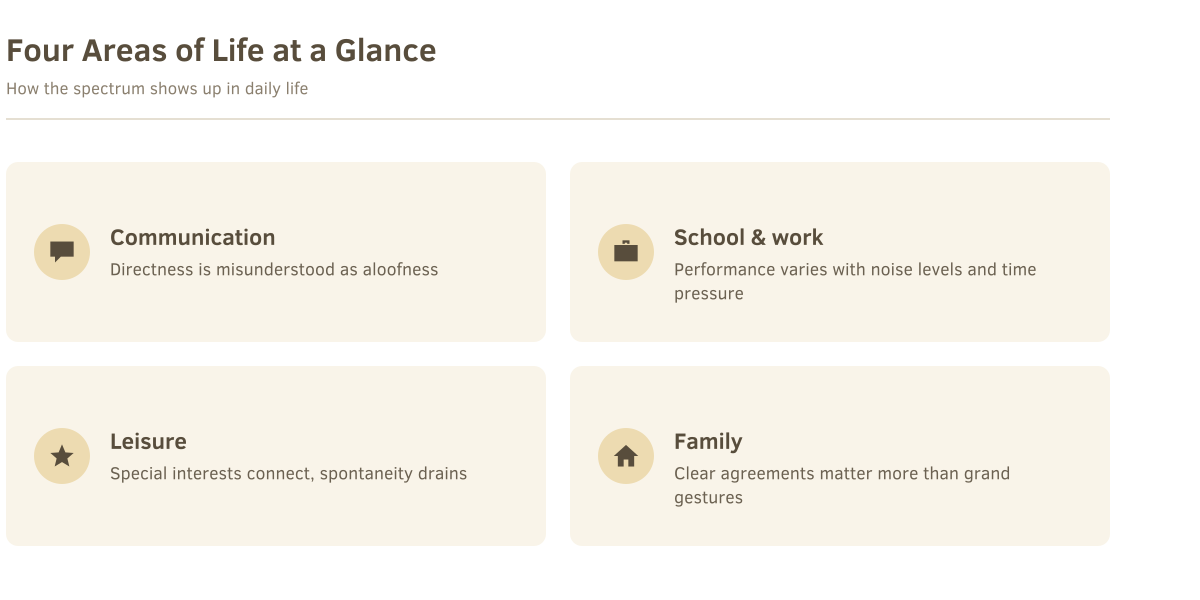
The spectrum rarely affects just one area of life. Communication, school or work, leisure and family life are often affected in equal measure – sometimes noticeably straight away, sometimes only over the course of months or years. Those who are aware of these effects can take early action to counter them, rather than having to make sense of misunderstandings at a later stage.
Communication and Social Misunderstandings
Misunderstandings often arise from differing expectations and communication styles. What is intended as directness or reserve is sometimes interpreted by those around you as a lack of interest or rudeness – with noticeable consequences for friendships, teams and relationships.
- Vague agreements
Without clear, preferably written, agreements, there is room for interpretation, which can lead to disappointment later on.
- Unannounced changes
Spontaneous rescheduling of appointments or changes of topic during conversations can trigger stress that is barely visible to others.
- Withdrawal as a coping mechanism
Short breaks to process stimuli are sometimes mistakenly interpreted by colleagues or friends as a lack of interest.
School, Education and Work
In everyday educational and professional life, unclear requirements and shifting expectations coincide with precisely those areas that are particularly stressful: rapid changes, unfiltered stimuli and implicit social rules. Many people show a marked discrepancy between their actual abilities and what actually comes across in everyday situations. Typical patterns include:
- Performance drops under time pressure or in noisy environments, even though the subject matter is actually well understood
- a full classroom or an open-plan office can lead to noticeable exhaustion after just a few hours
- Direct questions or instructions taken literally are sometimes interpreted by teachers or line managers as defiance rather than a need for clarification
Adjustments agreed in advance – such as fixed seating arrangements, headphones to block out noise or advance information about changes – noticeably ease the pressure in these situations.
Leisure, Interests and Social Environment
The effects are also clearly evident outside school and work. Club life, group activities or spontaneous get-togethers often involve precisely the stimuli and unwritten rules that take the most energy. At the same time, intense special interests provide an important balance and frequently form the basis of friendships with like-minded people – both online and offline.
- Clubs with clear rules and a fixed routine tend to be less stressful than spontaneous, unstructured group meetings
- Online communities focusing on specific interests often offer an easier way in than direct face-to-face contact
- Long, unplanned blocks of free time are more often perceived as genuine relaxation than a packed weekend programme
Family and Relationships
In one’s immediate circle, small changes often have a particularly significant impact: clear responsibilities, predictable daily routines and explicit agreements reduce friction. Conflicts often arise not from ‘disinterest’ but from differing perceptions – a pattern that can sometimes also manifest as social withdrawal when the strain persists over a longer period. Family members benefit from information about the spectrum and from sharing experiences, for example at counselling centres or in self-help groups. Understanding and a shared language are therefore central to everyday family life.
Request support now for yourself or your child at the Verus Bonifatius Clinic.
What You Can Do Yourself: Managing Daily Life and Finding Support
Self-help is no substitute for a diagnosis, but it can provide noticeable relief even before or alongside a professional assessment. It is not about ‘pretending’ to be something you’re not, but about managing stimuli, communication and expectations more consciously – and no longer measuring yourself against preconceptions that do not do justice to the spectrum.
Managing Stimuli and Structuring Daily Life
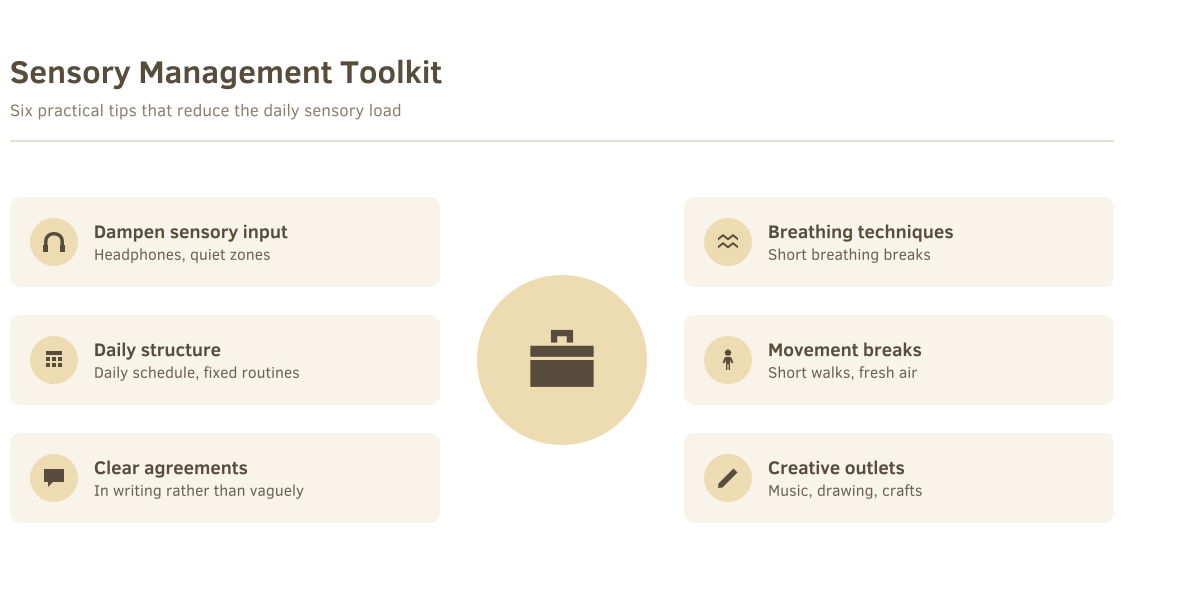
Many people benefit from mindful stimulus management and reliable routines. These provide a sense of security, whilst small, predictable changes allow for the necessary flexibility. Self-care is not an optional extra, but a prerequisite for stability.
- Stimulus management
Headphones, quiet zones, structured breaks and mindful screen time reduce the daily sensory load.
- Structuring daily life
Daily schedules, to-do lists, visual aids and regular eating and sleeping patterns create predictability. - Managing stress
Breathing techniques, mindfulness, exercise or creative activities can help to relieve inner tension – depending on what suits you best.
Confronting Prejudices and Myths With Confidence
There are persistent myths circulating across the spectrum. Some reduce people to their shortcomings, whilst others idealise individual abilities – neither does justice to diversity. If you are aware of the most common misconceptions, you can deal with them more calmly in everyday life and will find yourself having to justify yourself less often.
- The ‘lack of empathy’ myth: Many people with this condition experience strong empathy, but express it differently or are themselves overwhelmed by sensory overload.
- The ‘everyone is a savant’ myth: Exceptional ‘island talents’ are rare. More common are strengths such as precision, perseverance and pattern recognition.
- Myth: ‘Training makes it go away’: Support can improve skills relevant to everyday life, but it does not replace the underlying neurobiological difference.
- Myth: “Asperger’s syndrome is just a mild form”: The level of difficulty can be high – regardless of language ability or intelligence. The need for support should always be assessed on an individual basis.
Taking the Next Step: Where to Turn and How to Proceed
If the question ‘What is autism?’ has become personally relevant to you – for example, due to persistent feelings of being overwhelmed, social misunderstandings or the sense that you communicate ‘differently’ – a professional assessment can provide relief. The first points of contact are GPs and specialists, child and adolescent psychiatric or adult psychiatric outpatient clinics, and specialist centres. Gather observations in advance, including examples from everyday life, school or work, and, if possible, reports from earlier stages of development.
Acute crises – such as severe distress, self-harm or serious states of distress – require immediate help via the out-of-hours medical service (116 117), the telephone counselling helpline or the emergency services (112). In all other cases, it is worth taking a structured approach: gathering information, clarifying support objectives, planning diagnostics and implementing practical measures for everyday life.
How the Verus Bonifatius Clinic Supports People With Autism
At the Verus Bonifatius Clinic, we take a resource-oriented, practical approach. The aim is not to ‘change’ aspects of a person’s personality, but to promote understanding, reduce stressors and strengthen specific skills. Diagnosis and therapy are tailored to the individual’s profile and carried out in a calm, structured atmosphere, with transparent procedures and clear agreements.
A thorough diagnostic assessment forms the basis for effective support. Through psychoeducation, we explain in an accessible way how perception, communication and sensory processing interact – and how daily life, school or work can be organised accordingly. Building this knowledge often provides immediate relief and boosts self-efficacy. Depending on the individual’s profile and needs, we combine various elements:
- Behavioural therapy (individual and group therapy): It helps to manage stress, prepare for social situations and change distressing patterns.
- Behavioural training: In group settings such as social skills training, communication, changing one’s perspective and self-care are practised in a way that is relevant to everyday life.
- Family therapy intervention: Family and parent consultations strengthen mutual understanding and facilitate transitions to school, further education or work.
- Marte Meo: Using short video recordings of everyday life, successful moments of parent-child interaction are highlighted and reinforced.
- Physical, art and music therapy as well as body awareness, mindfulness and relaxation: Creative and body-oriented approaches help to regulate stimuli, relieve inner tension and find ways of expressing oneself beyond language.
The causes of autism are complex and the subject of intensive research; no single factor can be identified. In terms of treatment practice, this means that we do not focus on supposed ‘causes’, but on lived reality – on individual goals, challenges and strengths. Another distinctive feature of our clinic is that parents can bring their child with them during treatment; our paediatric support team provides on-site care. Before discharge, we work together to plan the transition back to everyday life, school or work, ensuring that the progress made is sustainable.
Discover the treatment options at the Verus Bonifatius Clinic
Faqs
How Do Social Anxiety and the Social Anxiety Spectrum Differ in Everyday Life?
Social anxiety is primarily characterised by a fear of being judged and the resulting avoidance behaviour. In the social anxiety spectrum, the focus is on differences in social perception and communication – regardless of whether anxiety is present. Both can occur simultaneously. The assessment therefore considers developmental history, communication style, sensory characteristics and the question of whether avoidance stems primarily from anxiety or from sensory overload or ambiguity in social cues.
Can Therapies ‘cure’ This Condition?
No. The aim is not ‘cure’, but rather to foster a better understanding, reduce stressors, learn helpful strategies and strengthen the individual’s own resources. Support services – such as psychoeducation, behavioural therapy, skills training, mindfulness and body-based approaches – can significantly improve quality of life, but do not replace the underlying neurobiological condition.
How Do I Explain the Diagnosis to My Child in an Age-appropriate Way?
Openly, respectfully and in concrete terms. Use examples from everyday life (“Noises are louder for you”, “You like clear rules”), identify strengths and difficulties, and emphasise that everyone is different. Picture books, child-friendly explanatory videos or advice centres can be helpful. It is important to have regular conversations rather than one-off “explanations”, so that questions can arise and be answered at a leisurely pace.
Note: The information in this article is not a substitute for individual diagnosis or treatment. If you are experiencing ongoing difficulties, please seek professional support.
Published on: 30.09.2026